
AI search is reshaping digital marketing, and this quarter’s earnings show where the money is moving.
For the past year, we’ve been telling our clients that one of the biggest shifts in digital marketing is underway. Consumers are increasingly turning to AI platforms like ChatGPT, Gemini, Claude, and Perplexity to discover businesses, research products, and make purchasing decisions.
This quarter’s earnings season gave us two more reasons to pay attention. Google is still growing, but the way people search is not standing still, and the numbers show it.
Two Numbers Worth Watching
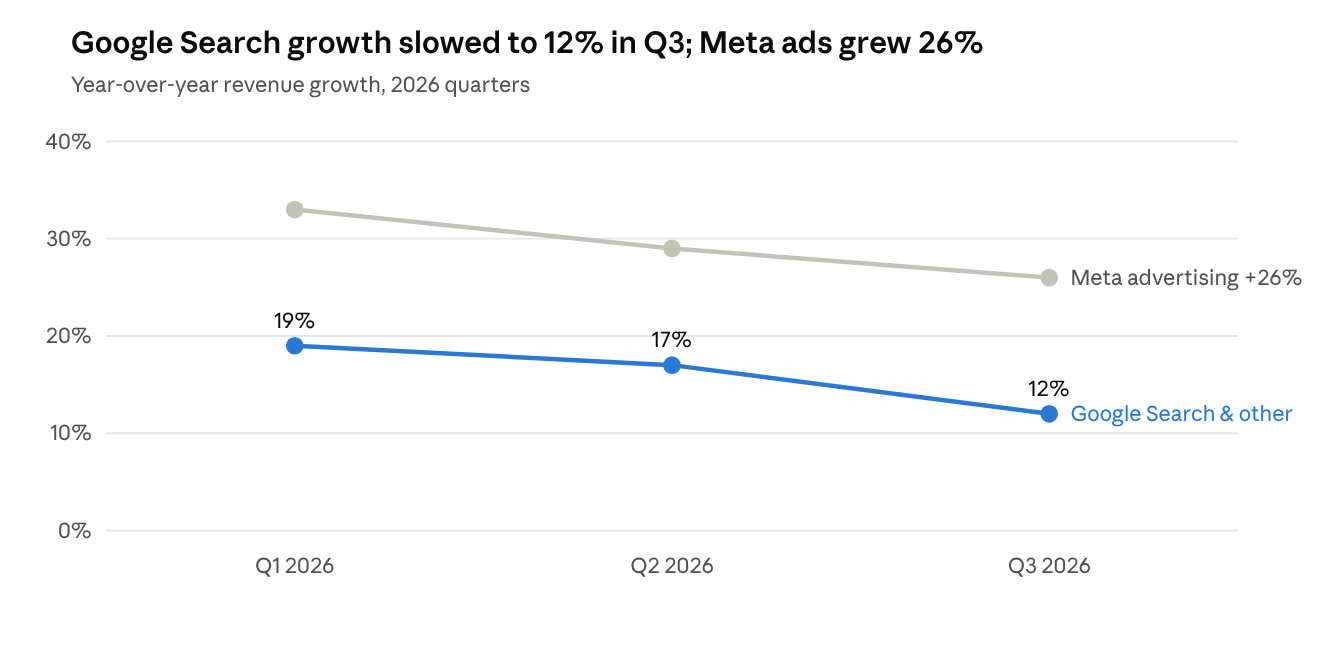
First, Google’s search advertising growth has been decelerating all year: 19% in Q1, 17% in Q2, and 12% in Q3. Google is still enormous and still growing, but the growth is slowing. Meanwhile, Meta’s advertising revenue grew 26% year over year in Q3. Businesses are shifting budget toward channels that create demand, not just capture it.
Second, and more important for how your customers find you: Google itself is becoming an answer engine. Google credits its own AI features, AI Overviews and AI Mode, for driving its search growth, and its Gemini app just passed one billion users. The search results page your customers see today is increasingly an AI-generated answer with a handful of recommended businesses, not ten blue links.
The way people find businesses is changing. And so is the way businesses need to market themselves.
Even When They Google You, an AI Is Writing the Answer
Instead of typing keywords, scrolling through sponsored results, and visiting multiple websites, consumers can now ask a detailed question and receive a tailored recommendation almost instantly, whether they’re asking ChatGPT or Google.
Consider the difference:
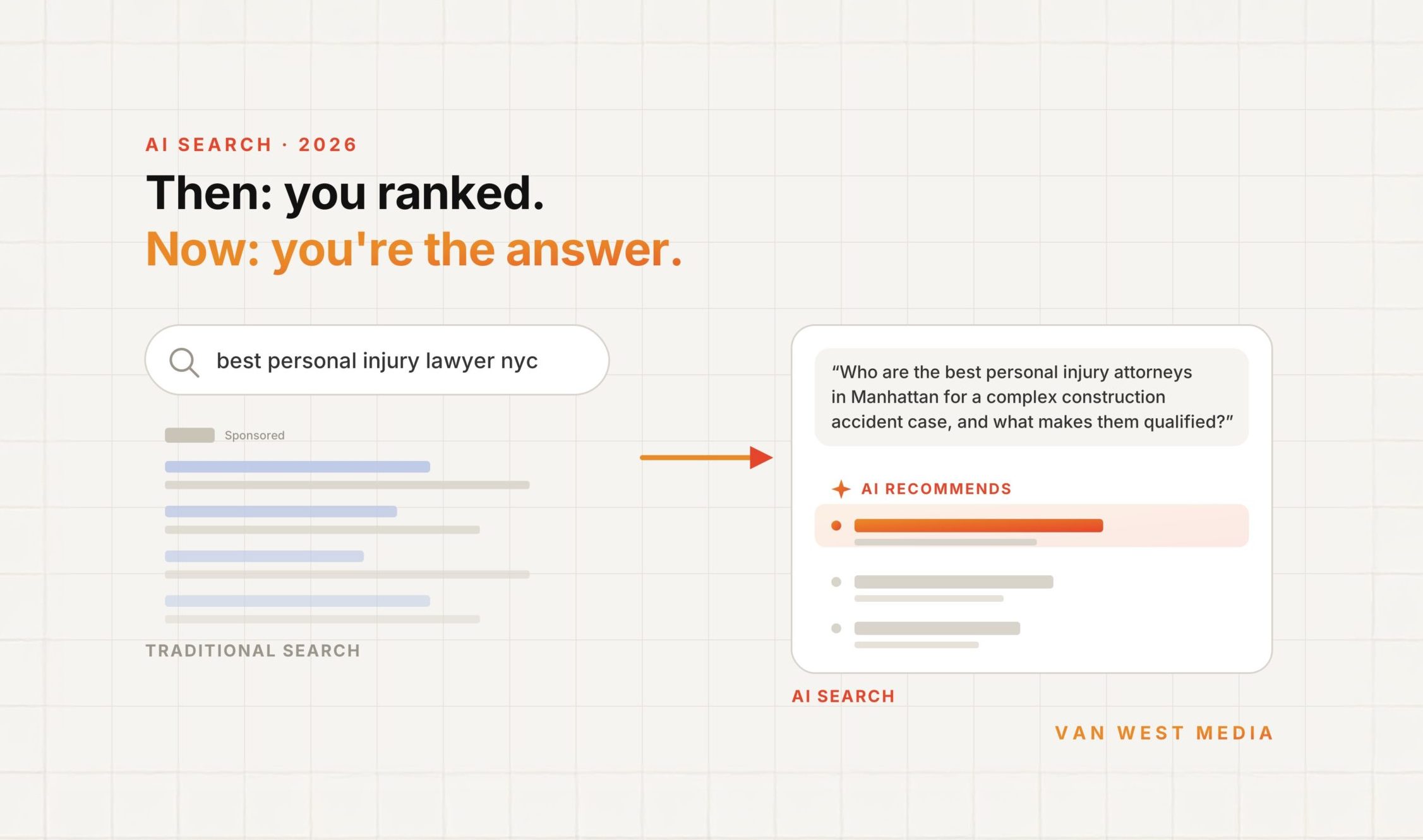
Traditional search: “Best personal injury lawyer NYC”
AI search: “Who are the best personal injury attorneys in Manhattan for a complex construction accident case, and what makes them qualified?”
The second query is far more specific, and the AI’s answer directly shapes which businesses a customer considers. If your firm isn’t in that answer, it’s not in the conversation.
The opportunity is no longer just to rank on Google. It’s to be one of the businesses AI recommends, on Google and everywhere else.
Why Traditional SEO Is No Longer Enough
SEO still matters. But it has become one piece of a larger discipline: making sure your business is discovered, understood, and recommended by AI-powered search, wherever your customers are asking.
At Van West Media, we call this Answer Engine Optimization (AEO). It builds on a strong technical foundation and credible, authoritative content, and extends it to the conversational questions people are actually asking AI, so that the answer includes you.
The businesses that adapt early will hold an advantage while competitors stay focused exclusively on traditional rankings.
Meanwhile, Meta Advertising Is Gaining Momentum
Here’s the other side of this quarter’s earnings. While Google’s search advertising growth has slowed, Meta reported 26% year-over-year advertising growth, reinforcing the value businesses are finding in Facebook and Instagram advertising.
Unlike traditional search advertising, which primarily captures existing demand, Meta advertising can help businesses create demand by reaching potential customers before they actively search for a solution.
With AI-powered campaign optimization, sophisticated audience targeting, compelling creative, and retargeting, Meta can be an effective channel for generating awareness, qualified leads, and sales. For many businesses, it’s an opportunity worth exploring as part of a more diversified marketing strategy.
Our Recommendation: Don’t Rely on Just One Channel
The businesses best positioned for this next chapter aren’t necessarily spending more on marketing. They’re adapting where and how they invest. At Van West Media, we’re encouraging our clients to think about digital visibility across three complementary channels:
- AI Search Optimization (AEO). Position your business to be discovered and recommended by ChatGPT, Gemini, Perplexity, Google’s AI Mode, and other AI-powered search experiences.
- Traditional Search (SEO & Google Ads). Continue capturing customers actively searching for your products and services while optimizing investments based on performance.
- Meta Advertising (Facebook & Instagram). Reach relevant audiences, generate demand, and bring new customers into your sales funnel through strategically targeted campaigns.
Together, these channels create a more diversified, resilient, and effective digital marketing strategy.
The Opportunity Is Now
For decades, businesses competed for placement in Google’s search results. Now, they’re also competing to be the answer AI provides.
The question isn’t whether AI will influence how your customers find businesses like yours. It’s whether they’ll find you, or your competitors.
We’ve been actively implementing AI search optimization strategies and helping clients identify new opportunities to improve their digital visibility and marketing performance. If we haven’t already discussed how these changes could affect your business, now is a great time.
Let’s review your current digital presence, assess your visibility in AI search, and explore whether a more diversified advertising strategy could help you capture additional opportunities.
Schedule Your AI Search Visibility & Marketing Strategy Review